About Us
Education, Inspiration, Conservation
Our history
-
1995
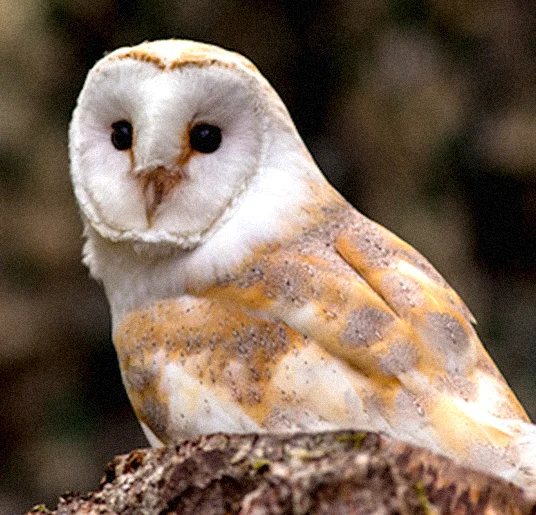
The inspiration: Project Barn Owl
From 1995-97 Rod Angus, a life-long ornithologist, took part in the British Trust for Ornithology’s ‘Project Barn Owl’ in his home area of Kintyre, Argyll.
Previously only 3 or 4 nest sites had been known, but Rod discovered more than 40 territories, making Kintyre a nationally important stronghold for Barn Owls.
-
2003
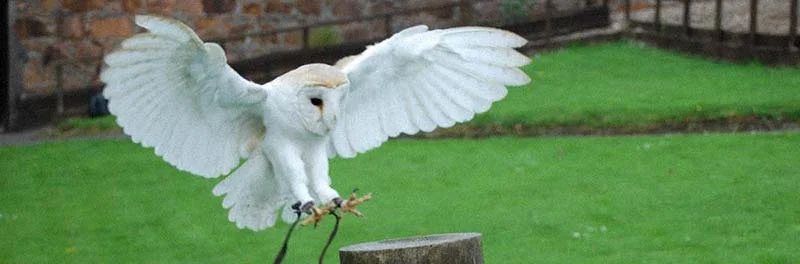
The conversion: hospital to owl centre
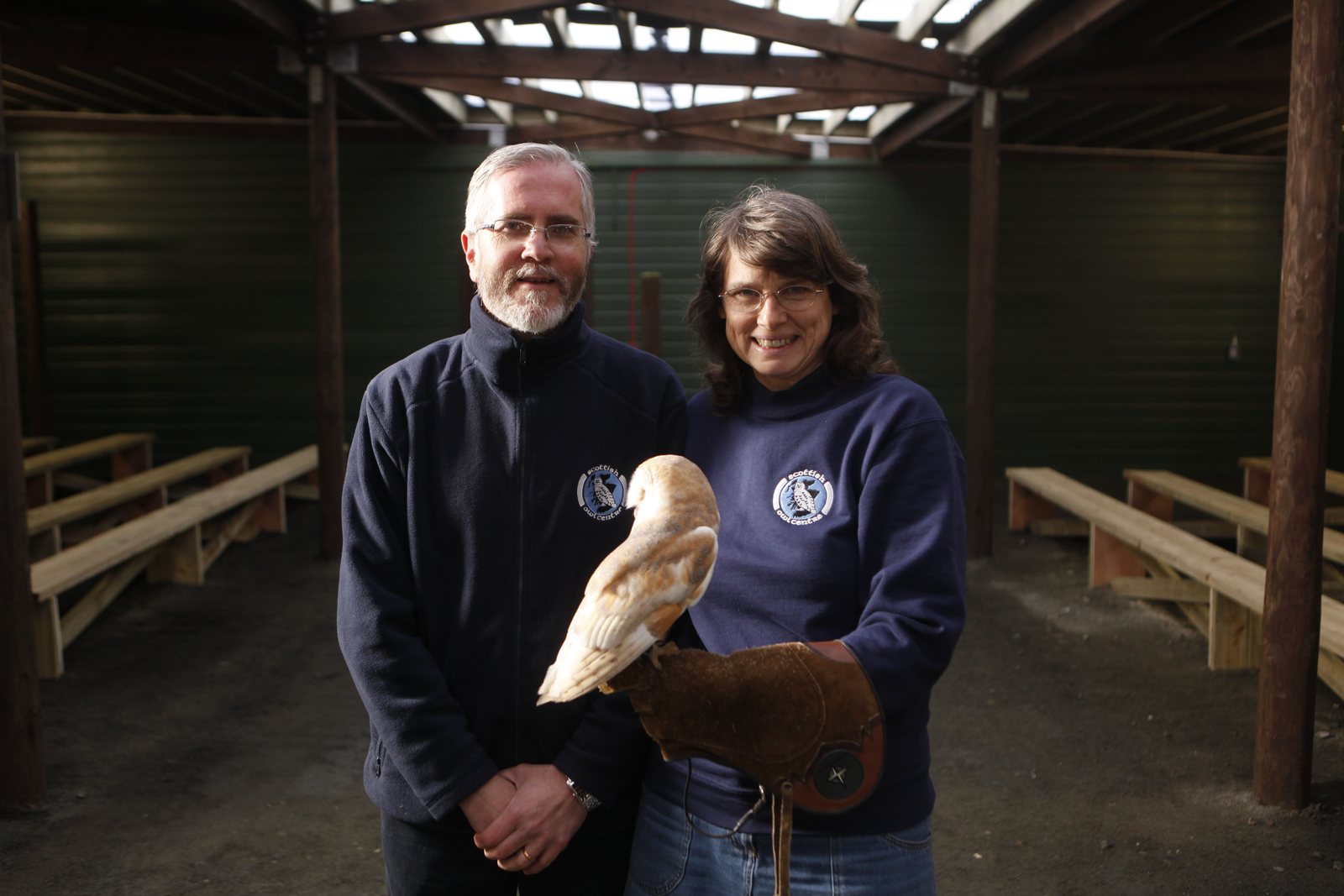
Inspired by this discovery and by family visits to various bird of prey centres, Rod and his wife, Niccy, founded the Scottish Owl Centre with a small collection of captive-bred owls in 2003.
After initially taking the owls to shows and events around Scotland, they decided to redevelop part of their home at the former Witchburn Hospital in Campbeltown. With Rod’s ornithological expertise and Niccy’s artistic and educational skills, they designed and created the first Scottish visitor centre dedicated to owls and their conservation.
The S.O.C. was opened to the public in May 2005 by the Director of the World Owl Trust, Tony Warburton, M.B.E. The Campbeltown Centre enjoyed 6 successful seasons, welcoming locals, tourists, schools, coach parties and the guests of the Hebridean Princess cruise ship... but it needed to spread its wings.
-
2012
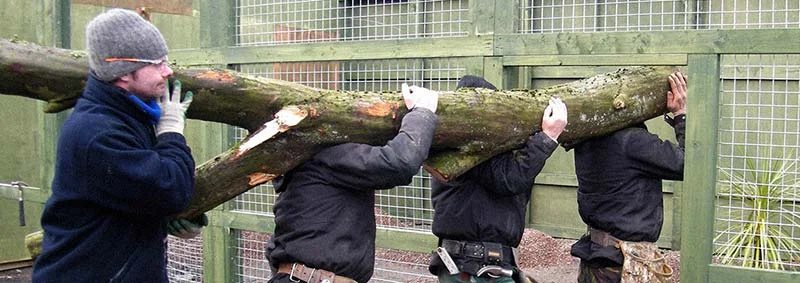
The development: Witchburn to Whitburn
With the Zoo Licence due for renewal in 2011 and the last of the 6 Angus children leaving home, it was time to take the fledgling Centre out into the wider world of central Scotland. Polkemmet Country Park, Whitburn, was chosen for its ideal location between Glasgow and Edinburgh and the suitably enclosed walled garden of the former mansion house.
After numerous delays in the building process, the relocated Centre finally opened its doors in March 2012. With increased visitor numbers, the S.O.C. has been able to enlarge the owl collection, add new education features and employ staff along with a host of dedicated volunteers.
Very enjoyable, very knowledgeable staff. A great day out.
Our ethos
The S.O.C. is not a falconry centre. We specialise in owls rather than raptors, because we want to portray their unique charisma and charm, which is often eclipsed beside the more dramatic hawks and falcons. We believe they are also excellent environmental educators.
Our motto, ‘Education, Inspiration, Conservation’, reflects the hope that by bringing people face-to-face with owls in all their beauty and by increasing public knowledge of the environmental issues which affect their survival, we will inspire greater interest in the wider conservation concerns of our world today.
As well as educating the public and breeding owls to increase the population of vulnerable species, we also contribute to research and conservation projects at home and abroad.
Our contribution
-
Collaboration with other zoos
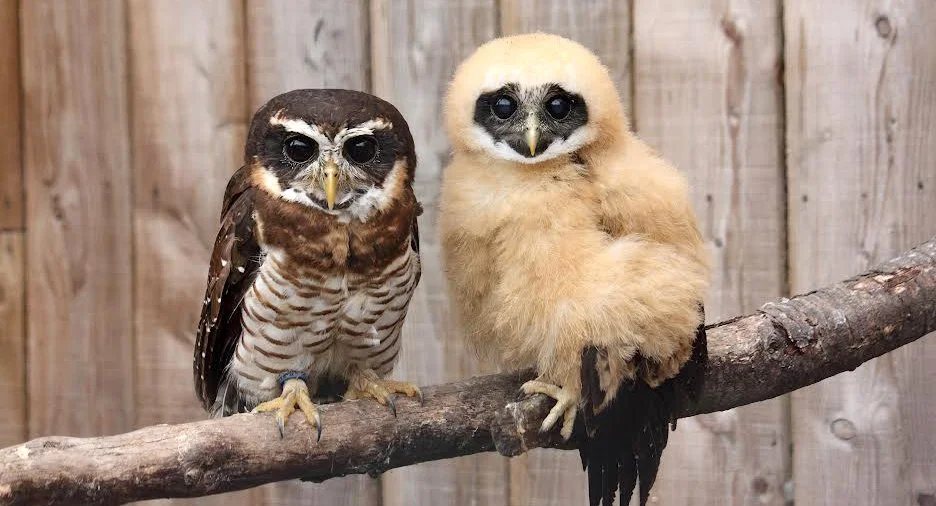
We collaborate and exchange owls as part of our respective conservation captive breeding programmes with a number of zoos in the UK and overseas including the following: Monticello Breeding and Conservation Centre, Italy (the origin of our Band-bellied Owls, whose chick was the first of the species to be bred in the UK); Tierpark Zoo, Berlin, Germany; Hamerton Zoo, Cambridgeshire; World of Owls, County Antrim; Hereford Small Breeds Farm Park and Owl Centre, Kington; Scottish Deer Centre, Cupar, Fife; Camperdown Wildlife Centre, Fife; Calderglen Zoo, South Lanarkshire.
-
World Owl Trust collaboration
As well as exchanging owls for breeding purposes, we have contributed to the WOT’s conservation captive breeding programme of the Ashy-faced Owl, the in situ research of the highly endangered Philippine Eagle Owl and their support of the protection and research of the recently sighted Shelley’s Eagle Owl in the Atewa Forest, Ghana.
-
International Owl Center, Minnesota, USA
We exchange ongoing research and information with the IOC, including owl calls and feather analysis, and our Head Keeper helps to moderate their regular live online presentations featuring international owl experts.
-
Zoological Museum Netherlands
We donated a number of our deceased owls to the Avian Ecomorphological Project in the Netherlands in association with the Biosphere Science Foundation. The researchers have since established the online Zoological Museum Netherlands and are using our birds for their ongoing ecological studies.
-
Barn Owl and Tawny Owl nestbox scheme
While our original Kintyre Barn Owl Project has gone from strength to strength under new management, we have inaugurated a similar scheme here in West Lothian.
-
Research with our own owls
Our ongoing studies include recording talon size and shape across different species, and UV black light photos of owl wing feathers to determine age.
Help us keep doing it: donate a dinner
It costs quite a lot each month to feed 160+ owls. If you can afford it, please help us care for our beautiful birds.
- Feeds a small owl for a month
- £3
- Feeds a medium owl for a month
- £5
- Feeds a large owl for a month
- £12
You can also adopt an owl for a year, from £25.
Come and meet them
Polkemmet Country Park, Whitburn, 30 minutes from Edinburgh and Glasgow.